How to Build Muscle for Beginners: A Simple 3-Day Plan
How to build muscle for beginners: a 3-day full-body program, clear progression rules, a sample week, and how much protein and sleep you need.
By Home Workout Planner Team · · 13 min read
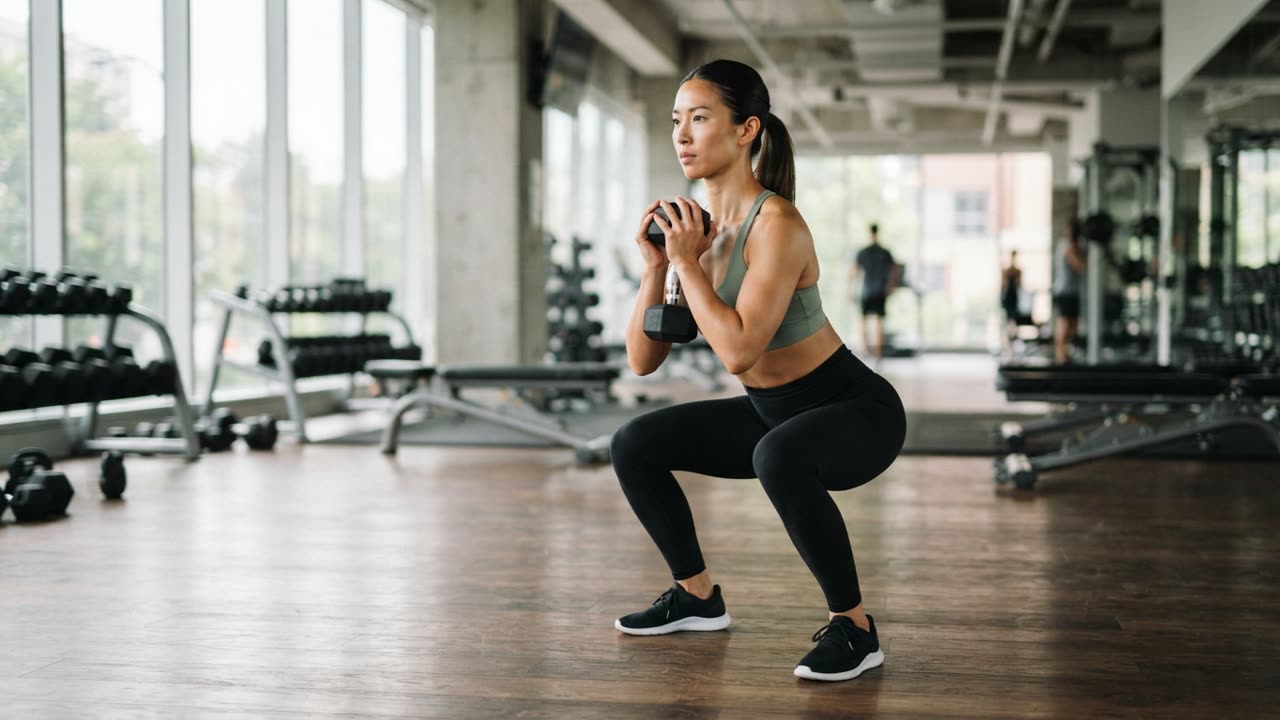
How to build muscle for beginners comes down to four habits: lift weights (or your bodyweight) two or three times a week, add a little weight or a few reps over time, eat enough protein and calories, and sleep well. A simple full-body program that you follow for three months will beat a complicated one you quit after three weeks.
This guide is for you if you are new to lifting or coming back after a long break. You will get a ready-to-use 3-day plan, rules for when to add weight, a sample week, and the food and sleep numbers that research supports.
What does a beginner need to build muscle?
Muscle grows when you ask it to do more than it is used to, then give it the food and rest to adapt. For a beginner that means four things working together.
- A training stimulus. Lifting that challenges each major muscle group every week.
- Progressive overload. Making the work a bit harder over time, by adding weight, reps or sets.
- Enough protein and energy. The raw materials to build new tissue.
- Recovery. Sleep and rest days, when the repair actually happens.
The good news: as a beginner, you respond to almost any sensible program. You do not need advanced techniques, supplements or a six-day split. You need a plan you can repeat and a way to track that you are getting stronger.
How often should a beginner train to build muscle?
Train each muscle two or three times a week by doing full-body workouts. The American College of Sports Medicine’s position stand on resistance training progression recommends that novices train the whole body 2 to 3 days per week, moving to 3 to 4 days once you reach an intermediate level.
Full-body training suits beginners for practical reasons. Each session hits every major muscle, so missing one workout costs you little. You also practice the main lifts more often, which speeds up learning good form.
Three days a week with a rest day between sessions (for example Monday, Wednesday, Friday) is the easiest schedule to stick to. Two days still works if that is all your week allows.
How many sets and reps build muscle?
Aim for 8 to 12 reps per set, 1 to 3 sets per exercise, with 1 to 2 minutes of rest. That is the ACSM recommendation for novice and intermediate hypertrophy training, using a moderate load of about 70 to 85% of the most you could lift once.
You do not need to test your one-rep max. Pick a weight you can lift for the bottom of your rep range with good form, where the last rep or two feel hard. If you can blow past 12 reps, it is too light. If you cannot reach 8, it is too heavy.
How many sets per muscle per week?
Weekly volume matters more than any single workout. A meta-analysis by Schoenfeld, Ogborn and Krieger found a graded dose-response relationship: more weekly sets led to more muscle growth, and the data covered up to about 10 sets per muscle per week. Most of the people in those studies were untrained, which makes the finding a good fit for beginners.
A practical target for your first months is roughly 6 to 10 hard sets per muscle group per week. The program below lands in that range. More volume may help later, but adding sets before you can recover from them only makes you sore.
Do light weights build muscle too?
Yes, as long as the sets are hard. Higher-rep sets with lighter weights can build muscle when you take them close to failure, which is why bodyweight training works. The bodyweight muscle-building guide covers that research and how to apply it at home. For most beginners in a gym, the 8 to 12 range is simply the most time-efficient.
Which exercises should beginners do?
Build your plan around movement patterns, then choose the version that fits your equipment. Multi-joint lifts work several muscles at once, and the ACSM recommends emphasizing them, with smaller isolation exercises added on top.
| Pattern | Main muscles | Gym option | Dumbbell option | No-equipment option |
|---|---|---|---|---|
| Squat | Quads, glutes | Leg press or back squat | Goblet squat | Bodyweight squat, split squat |
| Hinge | Hamstrings, glutes, lower back | Romanian deadlift (barbell) | Dumbbell Romanian deadlift | Glute bridge, single-leg hip hinge |
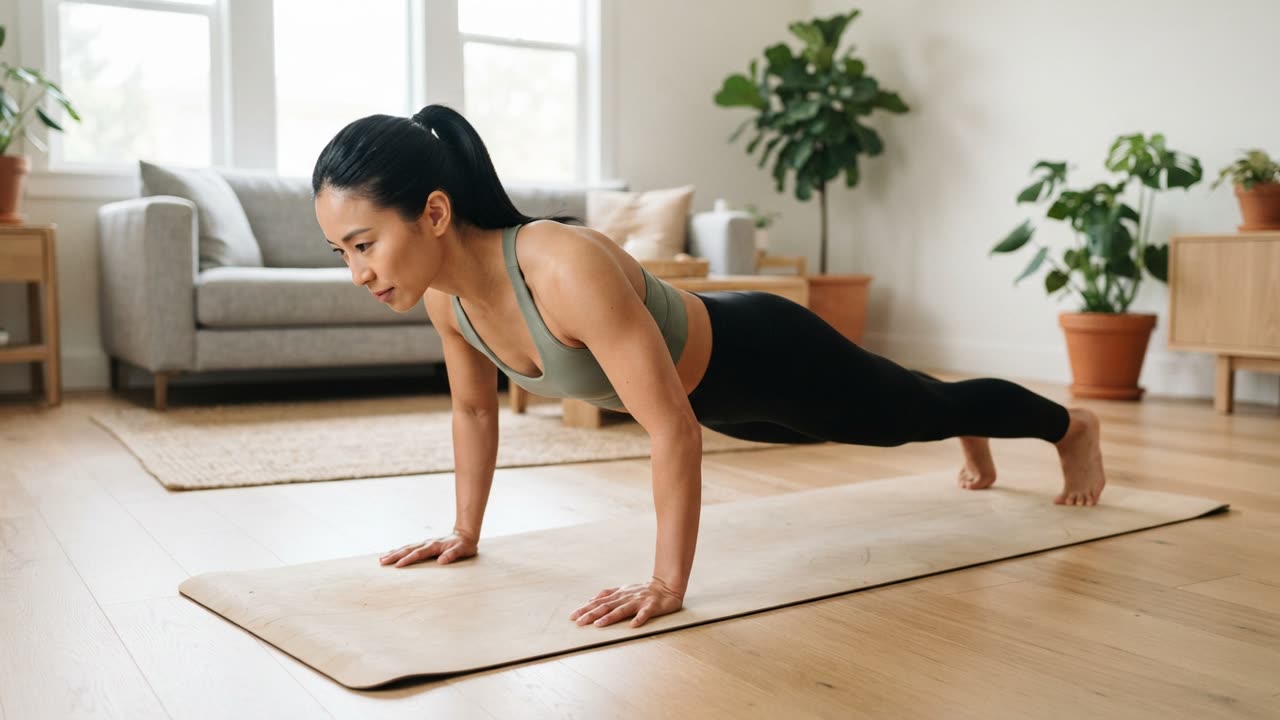
| Horizontal push | Chest, front shoulders, triceps | Bench press or chest press machine | Dumbbell bench or floor press | Push-up |
| Vertical push | Shoulders, triceps | Shoulder press machine | Seated dumbbell press | Pike push-up |
| Horizontal pull | Upper back, lats, biceps | Seated cable row | One-arm dumbbell row | Inverted row under a sturdy table |
| Vertical pull | Lats, biceps | Lat pulldown | (use a band or pulldown) | Chin-up negatives |
| Arms and core | Biceps, triceps, abs | Cable curls and pressdowns | Curls, overhead extension | Plank, dead bug |
Pick one option per row and keep it for the whole block. Changing exercises every week makes it impossible to tell whether you are getting stronger.
How to build muscle for beginners: a 3-day program
This plan alternates two full-body workouts, A and B. You train three days a week, so one week you do A, B, A and the next week B, A, B.
Sample week
| Day | Week 1 | Week 2 |
|---|---|---|
| Monday | Workout A | Workout B |
| Tuesday | Rest or a walk | Rest or a walk |
| Wednesday | Workout B | Workout A |
| Thursday | Rest | Rest |
| Friday | Workout A | Workout B |
| Saturday | Light activity | Light activity |
| Sunday | Rest | Rest |
Workout A
| Exercise | Sets x reps | Rest |
|---|---|---|
| Goblet squat (or leg press) | 3 x 8 to 12 | 90 to 120 sec |
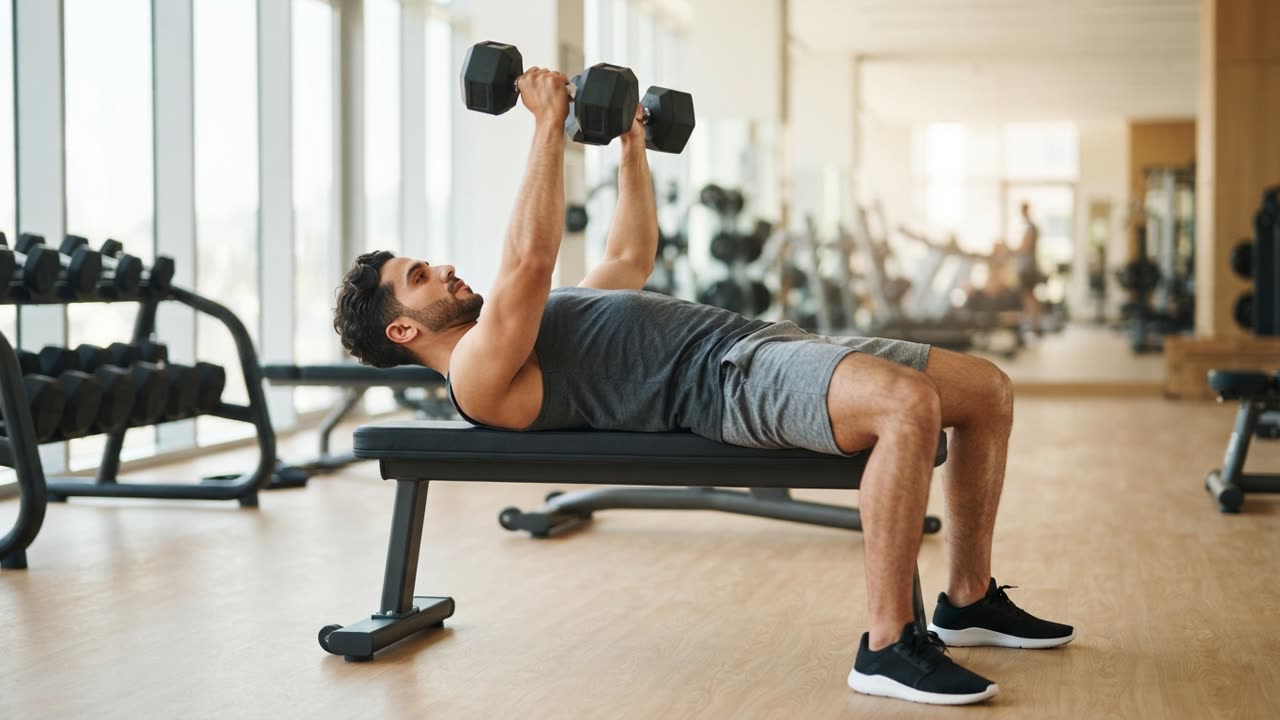
| Dumbbell bench press (flat or incline) | 3 x 8 to 12 | 90 to 120 sec |
| One-arm dumbbell row | 3 x 8 to 12 per side | 90 sec |
| Dumbbell Romanian deadlift | 2 x 10 to 12 | 90 sec |
| Dumbbell lateral raise | 2 x 10 to 12 | 60 sec |
| Plank | 2 x 20 to 40 sec | 60 sec |
Workout B
| Exercise | Sets x reps | Rest |
|---|---|---|
| Split squat (or leg press) | 3 x 8 to 12 per leg | 90 to 120 sec |
| Seated dumbbell shoulder press | 3 x 8 to 12 | 90 to 120 sec |
| Lat pulldown (or band pulldown) | 3 x 8 to 12 | 90 sec |
| Glute bridge or hip thrust | 2 x 10 to 12 | 90 sec |
| Dumbbell curl | 2 x 10 to 12 | 60 sec |
| Overhead dumbbell triceps extension | 2 x 10 to 12 | 60 sec |
Each session takes about 45 to 60 minutes. Over a week, your quads, back and chest each get roughly 6 to 9 hard sets, which sits inside the range the volume research supports for beginners.
How to warm up
Spend 5 minutes on easy cardio or brisk walking, then do one or two light sets of your first exercise before the work sets. A light set of each new lift is enough for the rest of the session. Long stretching routines before lifting are optional.
Training at home instead?
If you have a pair of adjustable dumbbells, you can do almost all of this plan at home: swap the lat pulldown for a resistance band pulldown and use a floor press if you have no bench. With no equipment at all, start with a full-body home workout for beginners and the progressions in our guide to home workouts without equipment.
How do you choose your starting weights?
Your first two weeks are for finding the right loads, so start lighter than your ego wants. Use this process for each exercise.
- Pick a weight that feels easy. Use a lighter pair for small-muscle moves like lateral raises and curls than for presses and rows.
- Do one set of 10 reps. Watch your form. If every rep looks and feels the same, the weight is light enough to learn on.
- Rate the effort. If you could have done many more reps, go up one step next set. If the last reps were a grind or your form slipped, go down one step.
- Settle and record. Once a weight lets you reach 8 to 12 reps with the last one or two feeling hard, write it down. That is your starting point for double progression.
Expect your numbers to rise quickly in the first month. That early jump is normal, so do not judge the program by it.
Form cues for the main lifts
Good reps build more muscle than sloppy heavy ones. Keep these cues in mind, and watch a video demo of any exercise you have not done before.
- Goblet squat: hold the dumbbell at your chest, sit down between your heels, and keep your chest up and knees tracking over your toes.
- Dumbbell bench press: squeeze your shoulder blades together, lower the dumbbells until they are level with your chest, and press up without bouncing.
- One-arm row: keep your back flat and pull the dumbbell up toward your hip.
- Romanian deadlift: soften your knees, push your hips back with a flat back, and stop when you feel a strong stretch in your hamstrings.
- Shoulder press: brace your abs and press straight up without leaning back.
How do you progress each week?
Progressive overload is what turns a workout into a program. The simplest method for beginners is double progression: work up the rep range first, then add weight.
- Start in the range. Choose a weight you can lift for about 8 reps on every set with good form.
- Add reps. Each session, try to add a rep to one or more sets, keeping the same weight.
- Hit the top twice. When you can do 1 to 2 reps above your target on every set in two sessions in a row, it is time to go up. This is the trigger the ACSM position stand uses.
- Add weight. Increase the load by about 2 to 10% (the ACSM range). For most dumbbell exercises that means the next pair up, often 5 lb (2.3 kg) heavier.
- Drop back to the bottom. With the new weight you will likely get 8 reps again. Repeat the cycle.
Write every set down: exercise, weight and reps. A notebook works, and so does the app’s history calendar. Without a log you are guessing.
A 12-week plan at a glance
| Weeks | Sets per exercise | Focus |
|---|---|---|
| 1 to 2 | 2 | Learn the movements. Stop each set with a few reps still in the tank. |
| 3 to 8 | 3 for the main lifts | Push sets closer to failure and use double progression every session. |
| 9 to 12 | 3 | Keep progressing. If recovery is good, you can add a fourth day or move to an upper/lower split. |
If you are weighing a fourth day, our comparison of the 3 day split vs 4 day split explains who benefits from it.
What if you stop progressing?
Stalls happen. If one lift has not improved for two or three sessions, check the basics first: sleep, food, and whether you are actually pushing sets hard. If those are fine, drop that exercise’s weight a little and build back up; you will often pass your old best within a few sessions.
How much protein do you need to build muscle?
Aim for 0.6 to 0.9 g of protein per pound of body weight per day (1.4 to 2.0 g per kg). That is the range the International Society of Sports Nutrition gives in its position stand on protein and exercise for building and maintaining muscle in people who exercise. The same paper suggests spreading it across the day in doses of about 20 to 40 g, every 3 to 4 hours.
| Body weight | Daily protein (1.4 to 2.0 g/kg) |
|---|---|
| 130 lb (59 kg) | 83 to 118 g |
| 160 lb (73 kg) | 102 to 145 g |
| 190 lb (86 kg) | 121 to 172 g |
| 220 lb (100 kg) | 140 to 200 g |
If you have a lot of body fat, base your target on your goal weight instead of your current weight, or the number gets unrealistically high. The app’s protein calculator does this math for you.
A simple way to hit the target is to build every meal around a protein food: eggs or Greek yogurt at breakfast, chicken, fish, tofu or beans at lunch and dinner, and milk, cottage cheese or a protein shake as a snack. Protein powder is optional and only helps if food alone leaves you short.
Do you need to eat in a calorie surplus?
To gain muscle as fast as possible, eat slightly above maintenance. A review of nutrition for muscle gain by Iraki and colleagues recommends a surplus of about 10 to 20% above maintenance calories, aiming to gain about 0.25 to 0.5% of body weight per week for novice and intermediate lifters.
For a 160 lb (73 kg) person who maintains on 2,500 kcal, that means about 2,750 to 3,000 kcal a day and a gain of roughly 0.4 to 0.8 lb (0.2 to 0.4 kg) per week. Gaining faster than that usually adds more fat than muscle.
Weigh yourself a few mornings a week and look at the weekly average. If it is not moving after two or three weeks, add a small snack’s worth of calories each day. If it climbs faster than the target, pull back a little.
You do not have to bulk. If you are starting with extra body fat, you can train hard and eat at maintenance or in a small deficit, and many beginners still gain muscle while losing fat. Learning how to count calories makes either approach easier, and our guide on how to create a calorie deficit covers the fat-loss side.
How important are sleep and rest days?
Very. Training breaks muscle down a little; the building happens between sessions. The CDC’s sleep guidance for adults is 7 or more hours a night for ages 18 to 60.
Rest days are part of the program. With three full-body sessions a week, you get at least one day off between workouts, which is enough for most beginners. Light activity like walking on those days is fine and helps you feel less stiff.
Some soreness in the first weeks is normal and fades as your body adapts. Sharp pain in a joint is different: stop the exercise, and see a doctor or physical therapist if it does not settle. Talk to your doctor before starting if you are pregnant or have a heart condition, high blood pressure or another medical condition.
Can you build muscle at home or with bodyweight only?
Yes. Muscle responds to hard work, and the source of resistance matters less than how close you take each set to failure and whether you progress. The catch is that bodyweight exercises get easy, so you need harder variations over time, and legs are the hardest to overload without weights.
Our article on whether you can build muscle with bodyweight exercises explains the research and gives progression ladders for push-ups, rows, squats and hinges. Adding a pair of adjustable dumbbells or a few resistance bands later makes progressive overload much simpler.
What are the most common beginner mistakes?
- Program hopping. Switching plans every couple of weeks means you never find out what works. Run one plan for at least 8 to 12 weeks.
- Sets that are too easy. Ten easy reps with a weight you could lift 25 times does little. Most work sets should end close to failure.
- Ego lifting. Adding weight while form breaks down shifts work away from the target muscle and raises injury risk. Earn every increase with clean reps.
- Not tracking. If you do not write down weights and reps, you cannot apply progressive overload on purpose.
- Under-eating protein. Many beginners eat far less than they think. Track your intake for a few days to check.
- Skipping legs or back. A balanced plan trains everything, which also helps your posture and lifts like the bench press.
How long does it take to see results?
Strength usually climbs first. In the first weeks you will add weight quickly, mostly because your nervous system gets better at the movements. Visible changes in muscle size take longer and depend on your starting point, consistency and diet.
Judge progress by trends over months: weights going up in your log, clothes fitting differently, and photos taken in the same light every four weeks. Body weight alone can mislead because water and food in your gut swing it from day to day.
Bottom line
To build muscle as a beginner, train your whole body two or three times a week with 8 to 12 rep sets taken close to failure, and add reps then weight using clear rules. Eat 0.6 to 0.9 g of protein per pound of body weight, a small calorie surplus if you want to gain faster, and sleep at least 7 hours. Run the plan above for 12 weeks and keep a log; the numbers will show you it is working.
FAQ
Can I build muscle if I am overweight?
Yes. New lifters with extra body fat can often gain muscle while eating at maintenance or in a small deficit, because training is a new stimulus and the body has stored energy to draw on. Keep protein high and follow the same program.
Should beginners train to failure?
Not on every set. Learn the movement first, then take most sets close to failure, stopping when you could only do one or two more clean reps. Going to true failure on heavy squats or presses without a spotter adds risk for little extra gain.
Do I need protein powder to build muscle?
No. Protein powder is a convenient way to reach your daily target, but meat, fish, eggs, dairy, tofu and legumes do the same job. Use it only if whole foods leave you short.
Is it better to use machines or free weights as a beginner?
Both work. The ACSM recommends including both free weights and machines for novice and intermediate lifters. Machines are easier to learn, and dumbbells let you train at home with little equipment.
What if I miss a workout?
Pick up where you left off at your next session instead of trying to double up. Missing one day changes little; what matters is training most weeks for months.
This article is general information, not medical advice. Check with a doctor before starting a new exercise or diet program, especially if you have a health condition or injury.