
Meal Plan for Weight Loss: Build One You Can Stick To
Build a meal plan for weight loss in 6 steps: set calories and protein, design your plate, prep ahead and adjust. Includes a sample day and prep table.
By Home Workout Planner Team · · 10 min read
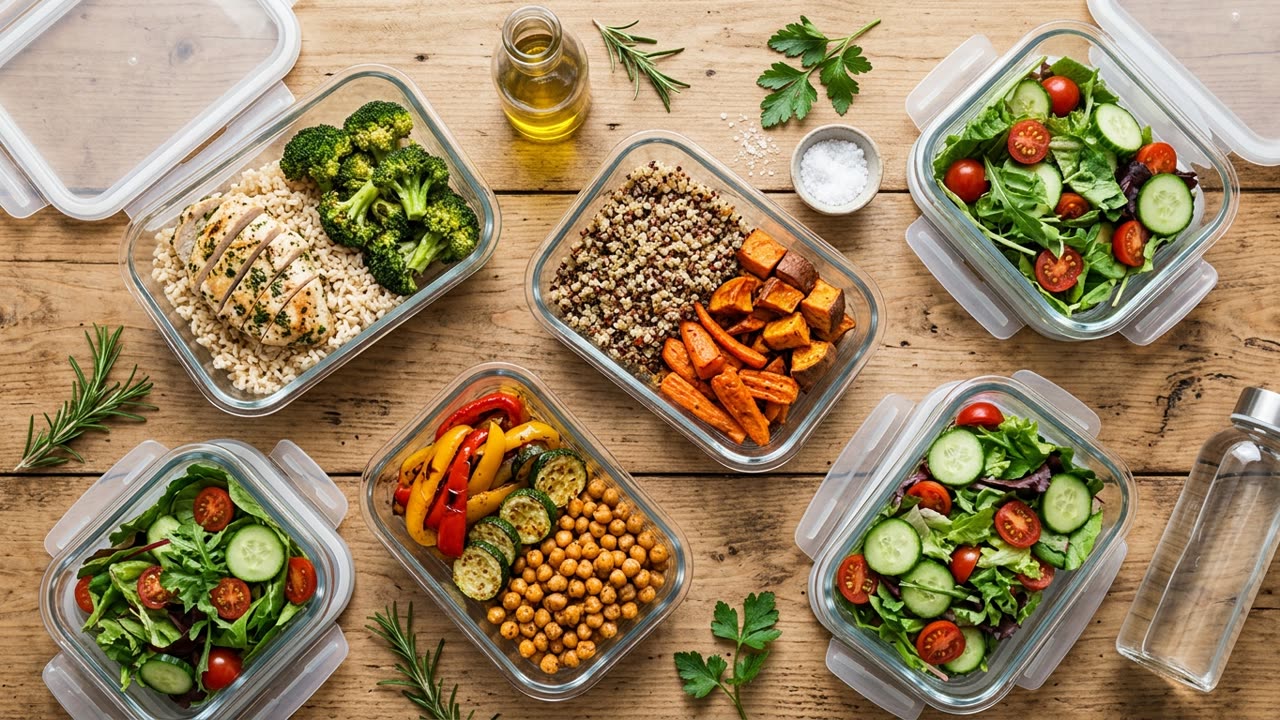
A good meal plan for weight loss has four parts: a calorie target about 500 below what you burn, enough protein at every meal, a plate built mostly from vegetables and other filling foods, and a prep routine you can repeat every week. Build those four and the rest is detail.
This guide is for adults who want to lose fat at a steady pace and would rather follow a clear routine than make food decisions all day. You will get six steps, a sample day of eating, a weekly prep schedule and a troubleshooting list.
If you have a history of disordered eating, skip calorie targets and talk to a doctor or registered dietitian first. The National Institute of Mental Health has information on getting help. Also check with a doctor before changing your diet if you are pregnant, have diabetes or take medication that food affects.
What makes a meal plan work for weight loss?
A meal plan works when you can follow it on a normal Tuesday. The calorie math sets the direction, but the plan only matters if you actually eat it for months.
The CDC says people who lose weight at a gradual pace of about 1 to 2 pounds a week are more likely to keep it off than people who lose it quickly. That pace needs a modest daily deficit, not a crash diet, so the plan can include foods you like and enough volume to keep you full.
A plan that works has these traits:
- A realistic calorie target. Low enough to lose weight, high enough that you are not hungry all day.
- Fixed anchors. The same breakfast and lunch most days, so there is less to decide.
- A shopping and prep routine. Food that is already in the fridge beats good intentions.
- Room for real life. One or two flexible meals a week for restaurants, family dinners and treats.
How do you build a meal plan for weight loss, step by step?
Follow these six steps in order. The first two give you numbers, the next three turn them into food, and the last keeps the plan working.
1. Find your calorie target
Estimate your maintenance calories, which is what you burn in a typical day. Our guide on how to count calories walks through the formula and the activity multipliers. Then subtract about 500 to set a starting target. The guide on how to create a calorie deficit explains other deficit sizes and why the scale slows down over time.
Worked example: a woman who burns about 2,100 calories a day subtracts 500 and gets a target of about 1,600 calories. This is an illustration, not a prescription. Your number depends on your size, age and activity.
Harvard Health says intake should not fall below 1,200 calories a day for women or 1,500 for men except under the supervision of a health professional. If your target lands under that line, use a smaller deficit and add walking instead.
2. Set a daily protein goal
Protein keeps meals filling, and it matters more when you eat less. The International Society of Sports Nutrition says 1.4 to 2.0 grams of protein per kilogram of body weight a day is enough for most people who exercise to build or maintain muscle. That is about 0.64 to 0.9 g per pound.
Worked example: at 180 lb (82 kg), the range is about 115 to 164 g a day. Pick a number inside the range that you can hit comfortably, and split it across your meals. At 4 eating occasions a day, 115 g is roughly 29 g each.
If you do not exercise, you can still use the lower end as a starting point. People with kidney disease should ask their doctor before raising protein.
3. Choose how many meals you eat
Pick a pattern you can keep: three meals, three meals and a snack, or two meals and two snacks. The total matters more than the schedule. Choose the layout that matches your hunger and your workday.
Eating at similar times each day also makes it easier to plan around training. If you work out at home, our full body workout at home for beginners fits into any of these layouts.
4. Design a plate you can repeat
Build every main meal from the same pieces. This table is a template you can fill with foods you like.
| Plate part | Share of the plate | Examples |
|---|---|---|
| Vegetables | About half | Spinach, broccoli, peppers, tomatoes, carrots, salad |
| Protein | About a quarter | Chicken, fish, eggs, Greek yogurt, tofu, beans, lentils |
| Starch or whole grain | About a quarter | Brown rice, oats, potatoes, whole-wheat bread, quinoa |
| Fat | A measured amount | Olive oil, nuts, avocado, seeds |
The plate shares are a visual rule of thumb, not exact measurements. Weigh or measure the fat, because oils and nut butters pack a lot of calories into a small spoon. If you want a ready-made structure, the app’s 30-day meal plans (standard, vegetarian and vegan) offer calorie targets from 1,500 to 5,000 kcal.
5. Write the week on one page
List breakfast, lunch, dinner and snacks for seven days on a single sheet or in a notes app. Repeat breakfast and lunch on most days. Give dinners some variety, for example fish on one night, a bean chili on another, and eggs and vegetables on a third.
Then build one shopping list from the page. Shop once, and keep a short list of backup meals (frozen vegetables, eggs, canned beans, canned fish) for the days the plan falls apart.
6. Check the trend and adjust
Weigh yourself a few mornings a week and compare weekly averages. If the average has not moved for three weeks, review your portions and logging before you cut calories further. Recalculate your target after you have lost a meaningful amount of weight, since a smaller body burns less.
What does a sample day of eating look like?
Here is one day at roughly 1,600 calories. The portions are an example to adapt. The calories are approximate, so check labels or the app’s food calorie table for the foods you actually use.
| Meal | What to eat | Why it works |
|---|---|---|
| Breakfast | 3/4 cup (180 ml) plain Greek yogurt, 1/2 cup (about 50 g) oats, berries | Protein and fiber start the day |
| Lunch | Chicken or chickpea salad: 4 oz (115 g) cooked chicken or 1 cup beans, big bowl of mixed vegetables, 1 tbsp olive oil, 1 slice whole-wheat bread | Portable, easy to prep |
| Snack | An apple and a small handful of almonds | Fruit and fat keep you going until dinner |
| Dinner | 5 oz (140 g) baked salmon or tofu, 1 cup cooked brown rice, 2 cups roasted broccoli | Balanced plate with a lean protein |
| Optional | Cottage cheese or a boiled egg | Fills any protein gap |
Scale the portions up or down to match your own target. If you are over your number by a little each day, trim the rice or oil before you cut protein or vegetables.
How do you prep a week of meals in about 90 minutes?
Preparing food in two blocks is easier than cooking every day. The table below is a simple routine.
| Day | Task | Time |
|---|---|---|
| Sunday | Write the week, make the shopping list | 15 minutes |
| Sunday or Monday | Shop | 45 minutes |
| Sunday | Cook two proteins, one grain, one tray of vegetables, wash salad greens | 60 to 90 minutes |
| Wednesday | Restock fresh vegetables, cook a second batch of protein | 30 minutes |
Store cooked food in covered containers in the fridge. Eat the first three days of prepared meals early in the week, and freeze the rest if you will not get to it in time. Check the storage times for the foods you cook before you batch them, and freeze anything you will not eat within a few days.
What goes on a weight loss shopping list?
A short, repeatable list makes the plan cheap and fast. Buy from each group below, then rotate the specific foods each week.
- Proteins: eggs, chicken breast or thighs, canned tuna or salmon, plain Greek yogurt, cottage cheese, tofu, canned or dried beans and lentils.
- Vegetables: one leafy green, one cruciferous vegetable (broccoli, cauliflower or cabbage), and two or three colors such as peppers, carrots and tomatoes. Frozen vegetables count and keep for months.
- Starches and grains: oats, brown rice, potatoes, whole-wheat bread or wraps, quinoa.
- Fruit: whatever is in season, plus frozen berries for yogurt and oats.
- Fats and flavor: olive oil, a bag of almonds or walnuts, spices, mustard, salsa, lemon and garlic. Strong flavors make lower-calorie food taste better.
Read labels on sauces, dressings and granola. These are the foods where calories hide, and a quick look at the label saves you from logging a mystery.
What does a week of dinners look like?
Dinner is the meal most people need variety for. This rotation reuses the same ingredients, so the shopping list stays short.
| Day | Dinner | Prep note |
|---|---|---|
| Monday | Baked salmon, rice, roasted broccoli | Cook extra rice for Wednesday |
| Tuesday | Chicken stir-fry with frozen vegetables | Cook in one pan |
| Wednesday | Bean and vegetable chili over rice | Makes two lunches |
| Thursday | Egg and vegetable scramble with toast | 10-minute meal for a busy night |
| Friday | Flexible meal | Restaurant, takeout or family dinner |
| Saturday | Turkey or tofu burgers with salad and potatoes | Freeze extra patties |
| Sunday | Sheet-pan chicken or tofu with mixed vegetables | Cook the week’s protein at the same time |
Swap days freely. The point is that you never have to ask “what is for dinner?” at 6 pm.
How do you handle restaurants, parties and travel?
Plan a flexible meal on purpose, rather than hoping the week stays on script. Eat your normal breakfast and lunch on the day, keep protein high, and choose one item you really want instead of everything on the table. Then return to the plan at the next meal.
At a restaurant, look for grilled, baked or roasted proteins and ask for a side of vegetables instead of fries when you do not want the extra calories. Sauces, dressings, drinks and shared appetizers are where estimates drift, so decide on them before the food arrives.
On trips, pack portable protein (jerky, nuts, protein bars you have already tried at home) and look for a grocery store near where you are staying. A hotel breakfast of eggs, fruit and oatmeal fits most targets.
How can you keep hunger under control?
Hunger ends more plans than any other problem. These habits help:
- Put protein in every meal. It keeps you full longer than most refined carbohydrates.
- Add vegetables first. A big portion of salad or cooked vegetables fills the plate for few calories.
- Swap sugary drinks for water. Sodas, juices and sweet coffee drinks add calories without filling you.
- Limit added sugars. The Dietary Guidelines for Americans recommend less than 10 percent of calories a day from added sugars. At 1,600 calories, that is no more than 160 calories, or about 40 g.
- Do not skip meals to save calories. It tends to end in a late-night snack that costs more than the meal you skipped.
If you feel dizzy, weak or constantly cold, eat more and talk to a doctor.
What should you do when the plan stops working?
Most problems fall into a few patterns. Work through them in this order:
- Weight is flat for under two weeks. Wait. Water shifts from salt, hard workouts and hormonal cycles can hide fat loss.
- Flat for three weeks or more. Weigh your portions for a week. Oils, sauces, drinks and weekend meals are the usual gaps.
- You are always hungry. Raise protein and vegetables, or raise calories slightly. A plan you quit is worse than a slower one.
- You are bored. Change the dinners and sauces, and keep the structure.
- You eat out a lot. Plan those meals too: choose grilled protein and vegetables, share or box half, and count it as your flexible meal.
- You lost a good amount of weight. Recalculate your maintenance and set a new target.
Pair the food with activity. Strength training helps you keep muscle while you lose fat, and our guide to how to build muscle for beginners explains the basics. If you want a no-equipment routine, start with the home workouts without equipment guide.
Should you follow a specific diet, like keto or intermittent fasting?
You can, but you do not have to. A calorie deficit is what drives weight loss, and different diets are different ways to reach it. Choose the style you can keep up. If you prefer keto, low-carb or 16:8 fasting, the same steps apply: set your calories, set your protein, then fit foods into the window or carb limit you chose.
If you are vegetarian or vegan, use beans, lentils, tofu, tempeh, soy milk and Greek yogurt or soy yogurt for protein, and check that your target is still reachable at your calorie level.
Bottom line
A meal plan for weight loss turns a calorie target into food you can buy, prep and eat. Start with a deficit of about 500 calories, aim for 1.4 to 2.0 grams of protein per kilogram if you exercise, build repeatable plates around vegetables, and adjust based on your three-week trend. Keep it simple enough that you would still follow it on a bad week.
FAQ
How many calories should a weight loss meal plan have?
Start from your maintenance calories and subtract about 500 a day, which is the usual starting deficit for roughly 1 lb (0.45 kg) a week. Keep the result at or above 1,200 calories for women or 1,500 for men unless a health professional is supervising you.
Do I need to count every calorie to follow a meal plan?
No. Many people count for two or three weeks to learn what portions look like, then repeat the same meals and check the scale trend. Counting is optional, but a plan with fixed portions does most of the work for you.
Can I eat the same meals every day?
Yes. Repeating breakfast and lunch makes planning, shopping and tracking much easier. Rotate the dinners and vegetables so you get a range of foods across the week.
What if I miss a day of my meal plan?
Eat your next planned meal as usual. One off day barely changes a weekly average, and trying to make up for it by skipping meals usually leads to overeating later.
Is a meal plan better than just eating healthy?
A plan removes daily decisions, which is where most diets slip. If you already eat well and lose weight without one, you do not need it. If you keep ending up at the drive-through at 6 pm, a plan helps.
This article is general information, not medical advice. Check with a doctor before starting a new exercise or diet program, especially if you have a health condition or injury.